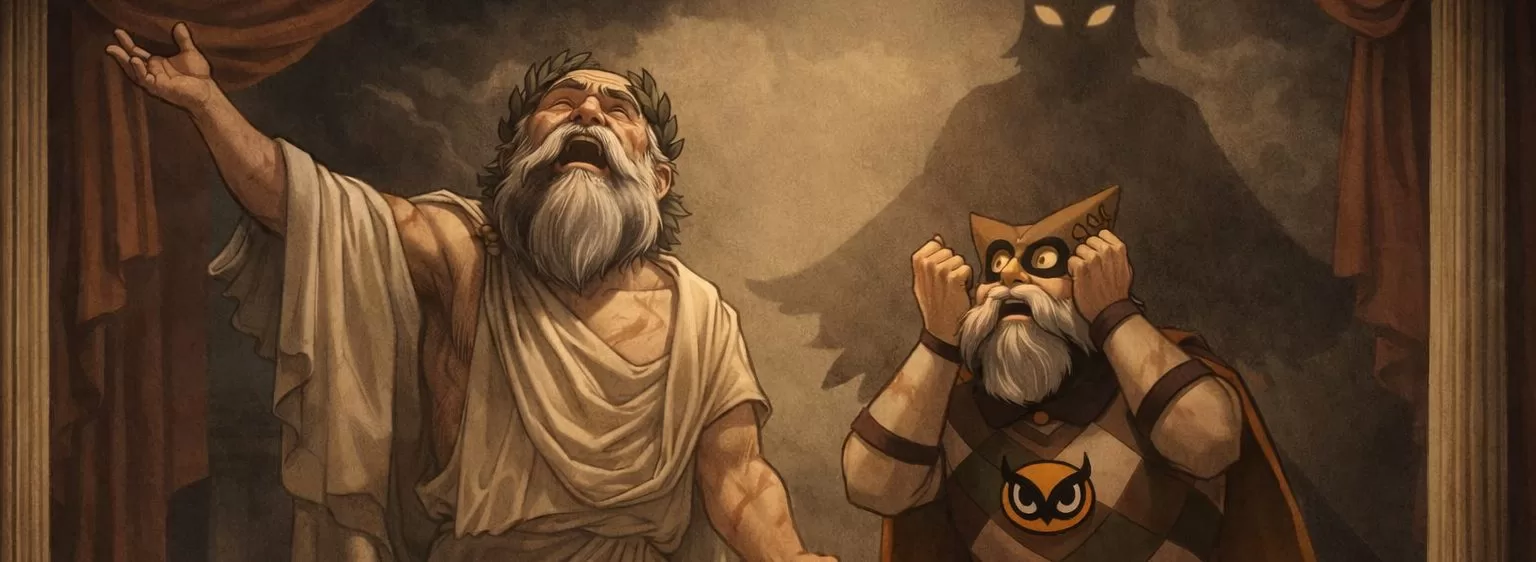
Dear reader, today we are going to look at a bit of a smaller character in the Miraculous universe. Luckily, however, the writers give depth even to the tiny side characters.
A tease: The Author frequently approaches villains in literature with a deep dive into their real motivations, not just the black-hat-bad-guy that is the easy fallback. Characters have to have a reason to act as they do, and I want to know the character’s deepest thoughts and drives—the rest are details. When I go into those discussions, there will be plenty of weight and philosophy into which we can wade. One approach I favor is examining them through the lens of a tragic hero in the Aristotelian sense. I think you’ll find, dear reader, that this approach is fascinating with Gabriel Agreste—and his three villain alter egos. However, that is not today’s discussion, and you’ll have to return to see that one.
A digression nobody asked for: Elsewhere in my writings and reflections, I do the same examination with Javert from Les Miserables, and that provides wonderful insight to his personality and motivations from beginning to end of both the text and the musical.
Today I want to talk about Principal Damocles. I already pointed out why his name, itself, entertains me, but there is more to him that deserves discussion. In many ways, Damocles maps cleanly to the classical definition of a tragic hero. So you shall have to tell me, does Damocles earn his name alongside Oedipus, or shall he be relegated to Inspector Gadget?
The Aristotelian Attributes
Hamartia — The tragic flaw
Hubris — Excessive pride or overreach. An important caveat and confession: this is technically from scholarship around Poetics, not Poetics, itself, but I think important for a discussion of The Owl.
Peripeteia — The reversal of fortune.
Anagnorisis — Recognition, the moment of seeing clearly.
Catharsis — The audience's emotional purgation through pity and fear.
And So We Begin
Hamartia — The tragic flaw or error.
Now, this is important, hamartia is not simply a moral failing—that would just be a simple dramatic device for any character. For a tragic hero, it is something deeper and more subtle: a misjudgment, often rooted in a kind of blindness. For Oedipus, the clearest is his attempt to subvert fate, thereby causing it. For Damocles it's precise: he cannot see that his heroism and his station are the same thing. This is key. Damocles’ dream is to be a hero. It is important that he doesn’t want to do this from a sense of self-aggrandizement. He does not want the adulation of being a hero entirely—if we are honest, both he and we want that to some extent. Rather, he wants to make a difference (read the works and theories of Victor Frankl to see the weight that carries—I am confident I will be writing about it myself in the future). That’s why he ends up fulfilled at the end of his first episode as The Owl once the akuma is released. Now, he continues to rescue kittens, but he calls the fire department for help. Sadly, the blindness is that, as the principal of Francois Du Pont High School, his very station in life makes a difference. Adapting some advice from St. Francis de Sales, heroism is different for any station in life. The way a soldier expresses heroism is different from the expression of a policeman or a waiter or a school principal—but all can be equally heroic. At some level, it seems we must accept that heroism is an excellence of person—a perfection of his role and station. It is the quest for agere to accurately and fully reflect esse.*
Hubris — Excessive pride or overreach.
This is the assumption that one's current position is insufficient, that one must become something rather than be something. The Owl costume is hubris made fabric. Damocles’ heroism does not have to change, and it is not dependent on the costume, even though he continues to wear it once his vision of himself as superhero is corrected the first time—more will come. He continues to rescue kittens—notably that rescue bookends the episode—but he calls for help from the fire department when a task is beyond him.
Before we leave our quick trip through hubris, it is important to note that this definition is key to understanding Principal Damocles. He believes that he must be more than a school principal to make a difference. That is the key to his failing in this illustration.
So far, we can say we understand the tragic flaw for Damocles. Now, we can speak of the emotional blindness that drove his choices. He has made the decision to defy fate, even just the fate of his station in life, and force his own shape onto reality. Tragic, in the best of times.
Peripeteia — The reversal of fortune. The moment circumstances turn.
and
Anagnorisis — recognition, the moment of seeing clearly.
Since these occur at near the same time and I can find no way to discuss one without bleeding into the other, I shall discuss them together.
Aristotle considered anagnorisis the most powerful element—it’s what makes a tragedy rather than a sad story. Damocles filling out the forms on the way out is textbook anagnorisis — and notably, Aristotle prized it most when peripeteia and anagnorisis arrive together, which they do here.
For Damocles, specifically, this moment is not part of any of the plotlines featuring him as The Owl. His overreach is highlighted in those, and he is given ways he can be heroic without resorting to activities that put him in unnecessary danger and force the real heroes to take time to save him instead of others who need help. Rather, his true peripeteia is the moment he finally lets himself be fired rather than accede to the demands of Chloe and Mayor Bourgeouis. This comes on the edge of his Anagnorisis. That firing is the external event that strips away the station he couldn't see the value of—and that allows him to finally see the true value and meaning in his vocation.
If it’s not already in mind, think back to season 5 episode 21 (since Miraculous is notorious for flaky episode order and number, the title is "Confrontation."). Here, after pressure mounts from Cloe and her parents, Damocles finally reaches a breaking point where he will go no further. That, by itself, is just a catastrophic moment, even though he seems to understand that he has power as principal to do something amazing. In this moment, Monarch sends a megakuma to take him again, but something new happens. All of the miraculous charms that Marinette has been distributing begin to glow, and, even more astoundingly to everyone huddled in his office, Juleka speaks—shouts even—intelligibly. And there it is: the moment he realizes he has already made a difference in his students’ lives. Damocles’ line at that moment is key: "Yes, I can do this. I can still make everything right." And there you have it, he realized what he was all along. He lost his job, but he realized that his ability to bring meaning to his life never came from The Owl persona. Rather, it came from him. That revelation pushes his own charm to become a proper shield, and he not only repels, but purifies the akuma. I will be discussing the akuma purification—it has a lot of weight that is glossed in most discussion—in another post, but, for now, we shall just focus on the anagnorisis of Denis Damocles. The fact that Damocles finally embraced his true esse, stared his weakness in the face, and regained hope is both what powered up his charm and what repelled and purified the megakuma. He quickly calls the mayor to inform him that he will not let his students suffer for this error—nay, this malicious act by Cloe and Lila.
It becomes clear when he, in a pseudo-angry tone says to the students still in his office, "What are you all still doing here? Don't you have new school forms to fill out?... If I'm to lose my job, then I might as well send you to the schools you actually want." The change in Damocles is clear enough in that moment, that I think it redundant for me to explain.
Catharsis — The audience's emotional purgation
It is important that the character does not experience the catharsis. Even the other players in the story do not necessarily (though they may). This is the interior response of the audience. Through pity and fear we look at the character through a new lens. In the case of Damocles, we experience pity for the man who couldn't see what he had until it was taken from him. Fear because we recognize the blindness—and, even more terrifying, if we are honest with ourselves, we see similar blindness in ourselves, at least analogically.
Well, there you have it
Certainly, we can approach a character like Principal Damocles as a clown—and the superhero suit featuring an argyle sweater and props Bandai would have been proud of (PGSM** anyone?). We can relegate him to Inspector Gadget territory. However, I believe the case has been made that he is deeper in his motivations, actions, and character arc. Never in history has a tragic hero perfectly fitted Aristotle’s definitions, but Denis Damocles comes as close as any.
*Worth clarifying that The Author is building this from the old agere sequitur esse (action follows being) principle in theology and philosophy. The being of a thing defines its actions because those actions are one of the expressions of being. A professor once noted, "A thing cannot be other than that which it is." To add to that, when one tries, he does violence to himself and often invites catastrophe—or tragedy.
**This one is a bit obscure, but it ties in to my previous argument about the influence of anime on Miraculous—or at least the parallel. In the early 2000s, a Japanese studio made a live action version of Sailor Moon. The full title in Pretty Guardian Sailor Moon. Rather than expend effort making props and weapons for the Magical girls—mahou shoujo (魔法少女), they found they already had all of the props mass produced, and used the toys from Bandai. That’s a merchandising coup if ever there was one.
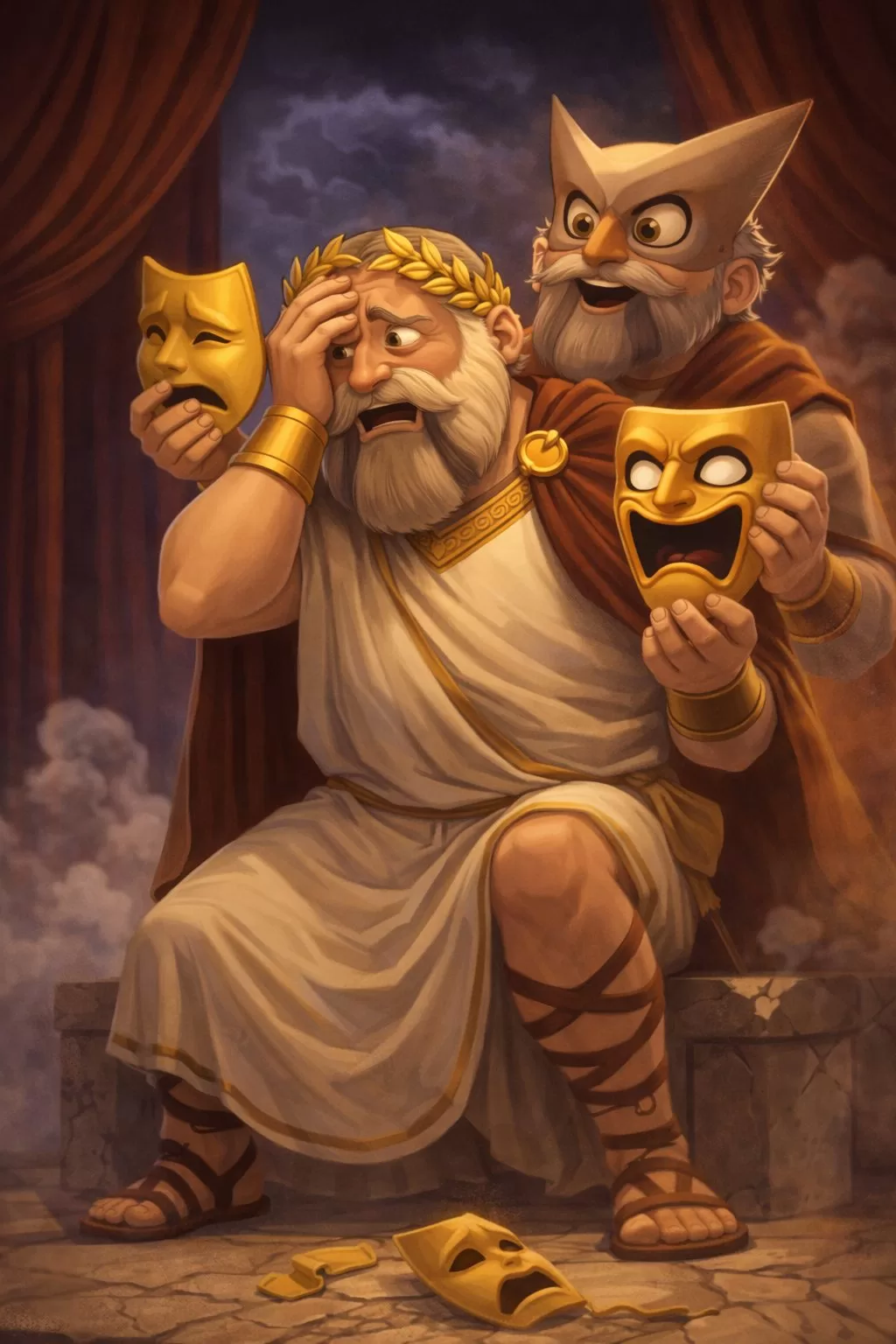
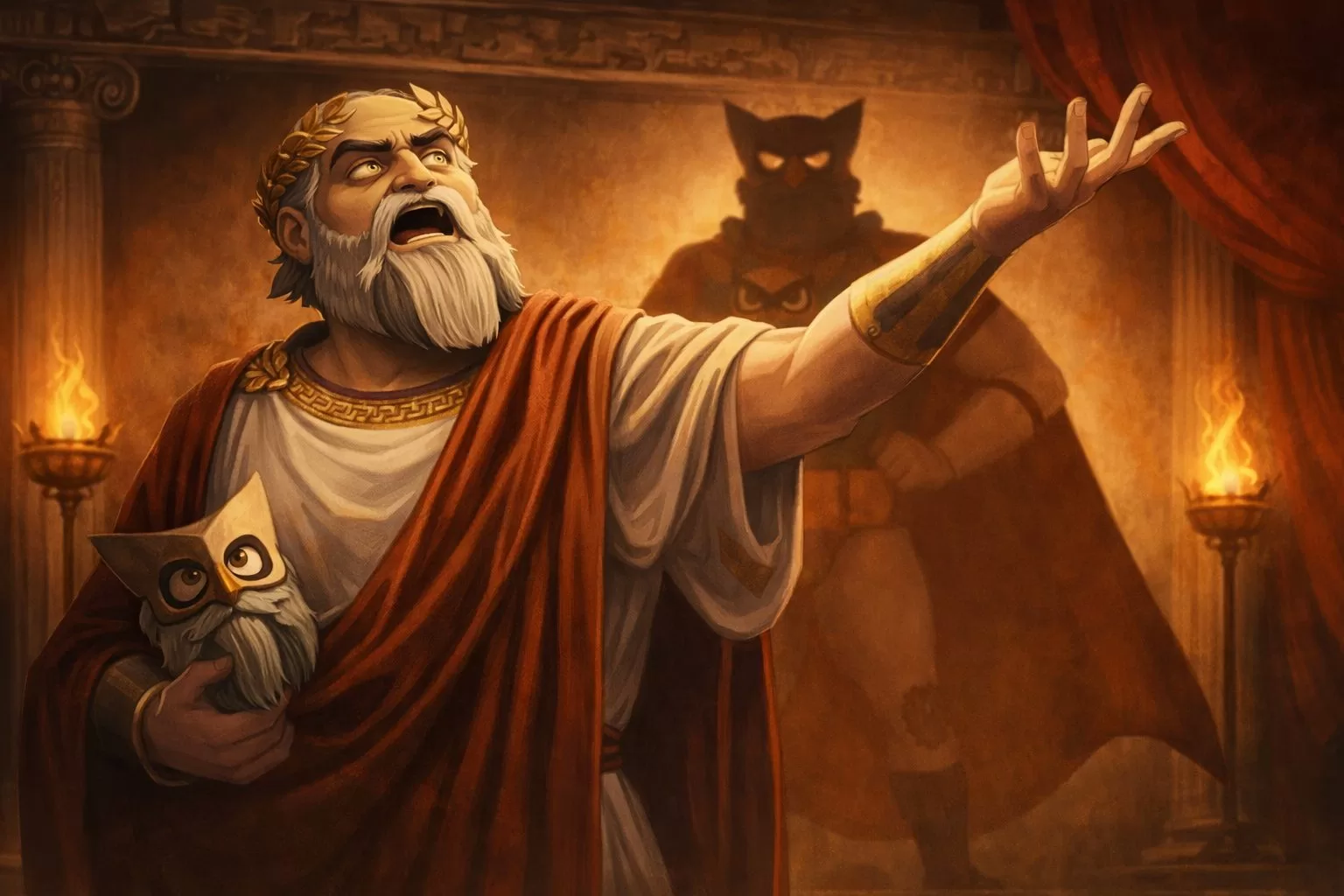
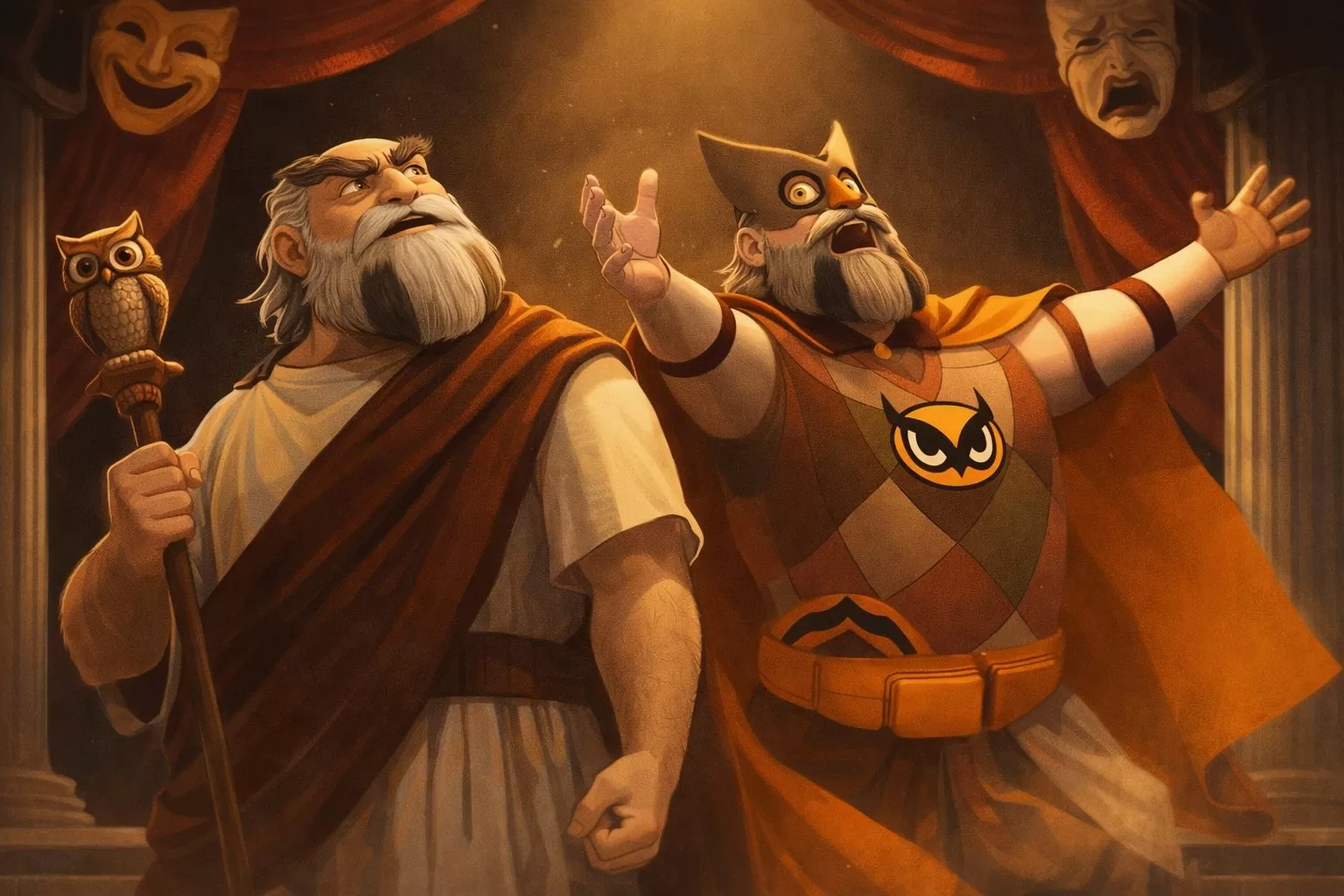
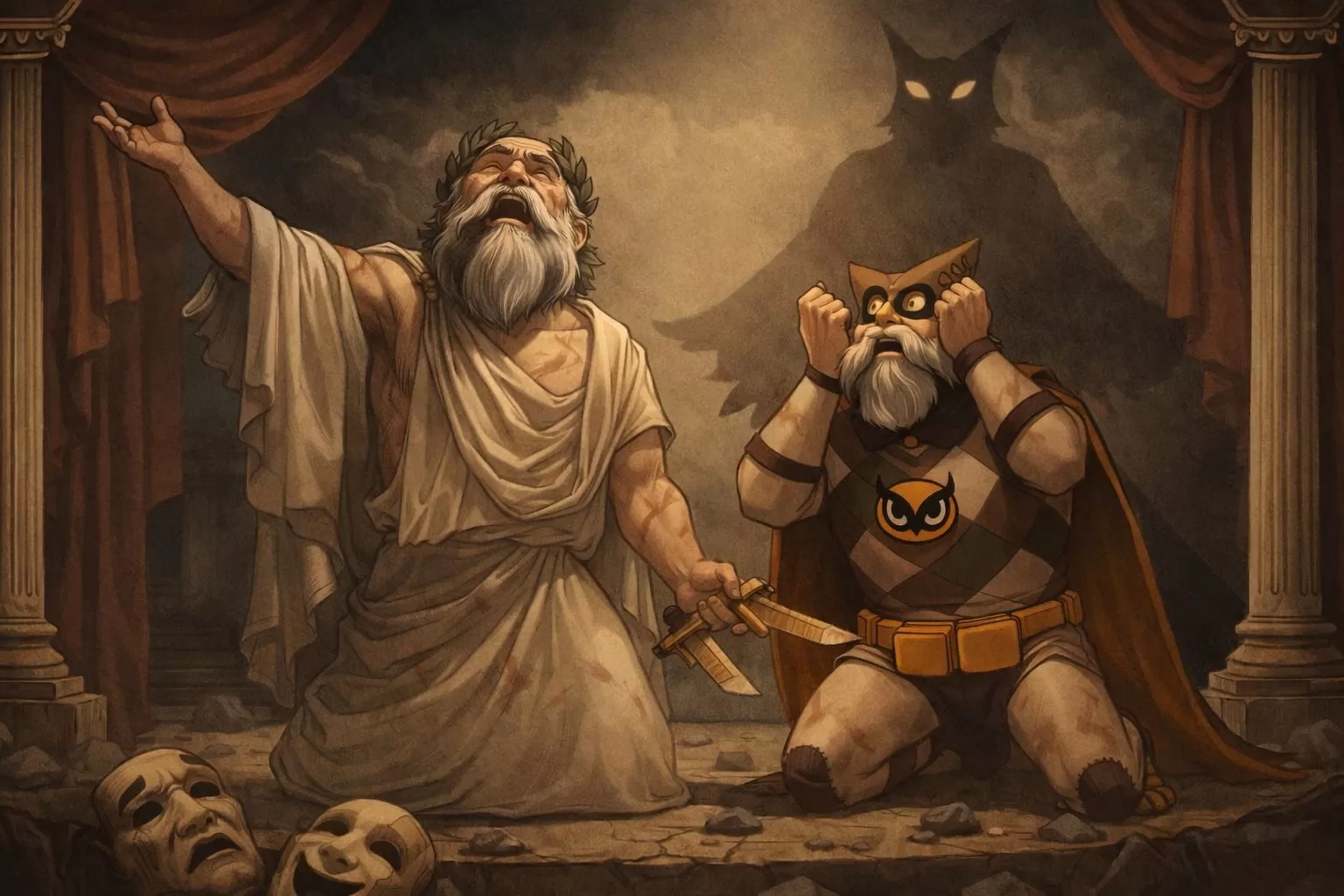
Some options from the featured image creation
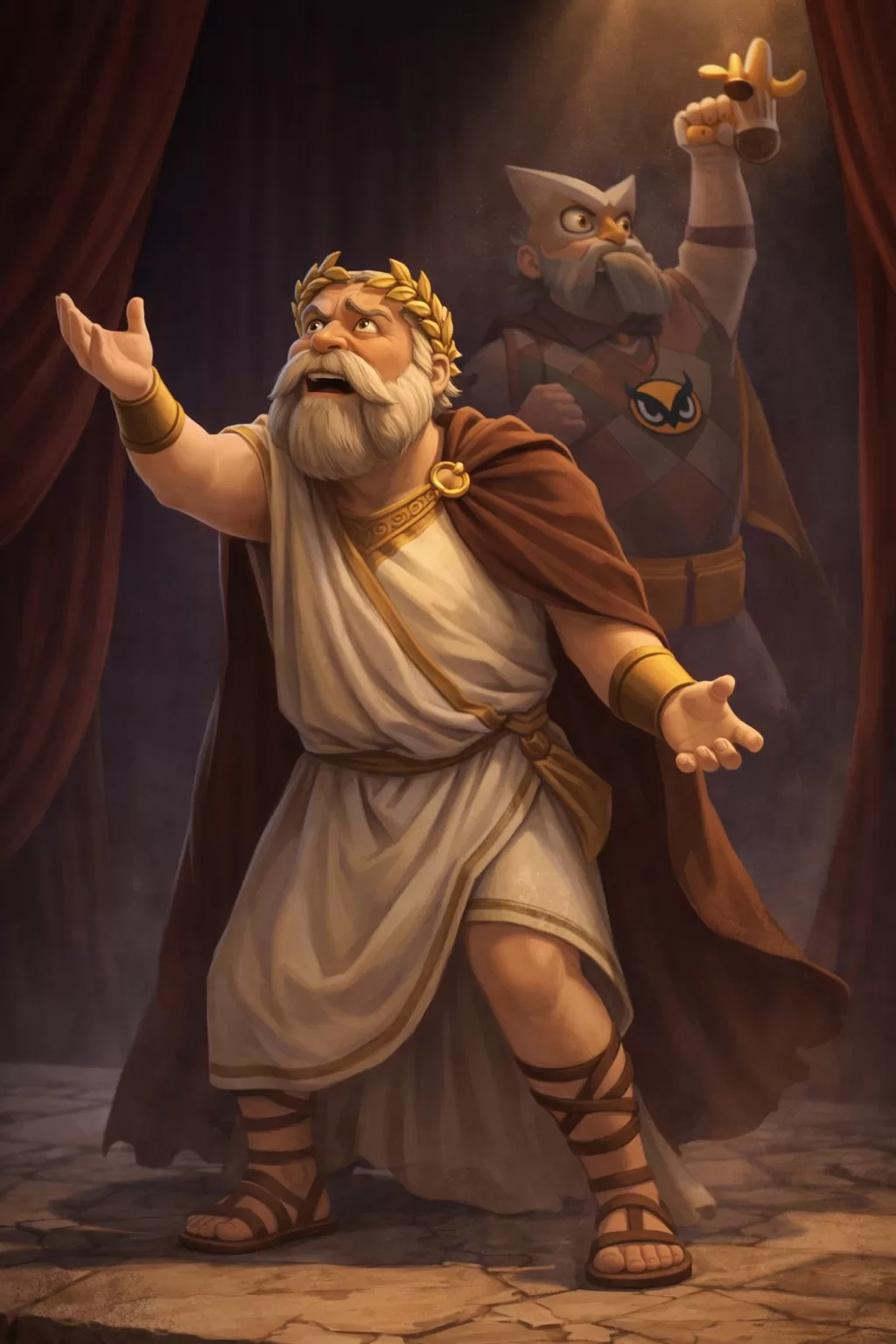
I've enjoyed playing with the wonders of AI based image generation for the featured image in these discussions. This one yielded so many fun ones, that I thought it only right to share.
0 Comments